
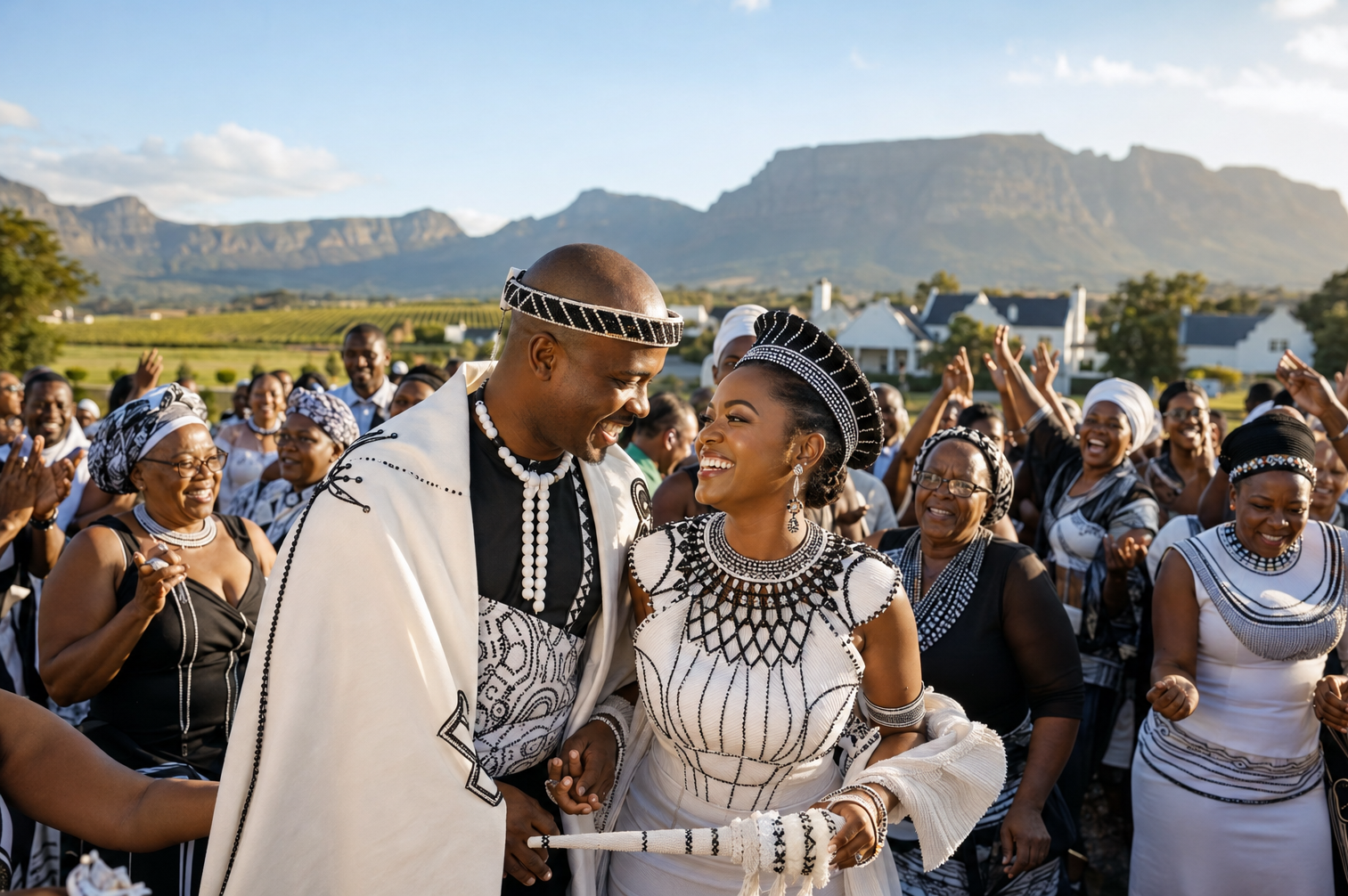
The Department of Home Affairs has issued a final reminder to members of the public whose qualifying customary marriages have not yet been registered.
The special registration period closes on 31 August 2026.
The deadline applies to customary marriages concluded before the Recognition of Customary Marriages Act came into operation in November 2000, as well as those concluded afterwards but not registered within the prescribed timeframe.
With only days remaining, qualifying couples should not wait until the final day.
What is the special registration period?
The Recognition of Customary Marriages Act 120 of 1998 places a duty on spouses to ensure that their customary marriage is registered.
A customary marriage concluded after the Act came into operation must ordinarily be registered within three months after its conclusion. The Act also allows the Minister of Home Affairs to prescribe a longer registration period by notice in the Government Gazette.
On 29 October 2024, the Minister published Government Notice 5484 in Government Gazette No. 51462, establishing a further registration period from 1 September 2024 until 31 August 2026.
The Department of Home Affairs has confirmed that the special period applies to qualifying customary marriages concluded before the Act came into operation on 15 November 2000 and those concluded afterwards but not registered within the required period.
The special registration period ends on 31 August 2026.
What does the extension actually do?
The 2024 Government Gazette notice extends the period during which qualifying customary marriages may be registered.
It does not create a new registration procedure or change the legal requirements for a valid customary marriage.
The registration process remains governed by section 4 of the Recognition of Customary Marriages Act and the Regulations issued under the Act.
The extension provides an additional opportunity for people who concluded qualifying customary marriages but did not register them within the original prescribed period.
Does failure to register invalidate a customary marriage?
No, not automatically.
Section 4(9) of the Recognition of Customary Marriages Act expressly provides that failure to register a customary marriage does not affect the validity of that marriage.
This means an otherwise valid customary marriage will not simply disappear on 1 September 2026 because it was not registered before the deadline.
However, registration and validity are two separate issues.
Registration does not create a marriage that was never legally concluded. Equally, failure to register does not automatically invalidate a marriage that was validly concluded under customary law.
For customary marriages concluded after 15 November 2000, the parties must generally both have been over the age of 18, must have consented to marry each other under customary law, and the marriage must have been negotiated and entered into or celebrated in accordance with the applicable customary law.
Whether a marriage is valid therefore depends on what occurred between the parties and their families, not merely on whether a registration certificate was issued.
Why does registration matter?
An unregistered customary marriage may still be valid, but it can be considerably more difficult to prove.
Under section 4(8) of the Act, a registration certificate constitutes prima facie proof of the existence of the customary marriage and the particulars recorded in the certificate.
Without that certificate, a spouse may have to rely on witnesses, affidavits, lobola documents, family evidence and information about how the marriage was negotiated or celebrated.
The absence of formal registration can create practical difficulties when:
- A spouse dies and an estate must be administered.
- Inheritance rights are disputed.
- Pension, medical aid or employment benefits are claimed.
- Property or matrimonial rights must be established.
- One spouse denies that the marriage existed.
- The marriage is relied upon in an immigration or permanent residence application.
A marriage may be valid but still be expensive and difficult to prove.
That is why registration matters.
How is a customary marriage registered?
Section 4(2) of the Act provides that either spouse may apply to a registering officer for registration of the customary marriage.
The applicant must provide the prescribed information and any additional information the registering officer may require to satisfy themselves that the marriage exists.
Regulation 2 of the Regulations under the Recognition of Customary Marriages Act requires the application to correspond substantially with Form A.
Form A records information about the spouses, the date and place of the customary marriage, the customary law under which it was concluded, the lobola agreement and any other existing marriages. It also contains declarations for the spouses, family representatives and, where possible, a traditional leader or delegate.
Although either spouse may legally initiate the application, Home Affairs may require additional declarations or supporting evidence before the registering officer is satisfied that a valid customary marriage exists.
Couples should visit or contact their nearest Home Affairs office immediately to confirm the current operational requirements before attending.
What if the marriage is disputed?
Registration is likely to be more complicated where one spouse denies the marriage, one spouse has died, family representatives are unavailable or there is disagreement about whether the customary requirements were completed.
The Act provides mechanisms for enquiring into the existence of an unregistered customary marriage. A person with a sufficient interest may, in appropriate circumstances, ask a registering officer to investigate whether the marriage existed.
A court may also order the registration, cancellation or correction of a customary marriage registration.
Professional family-law advice may be required where the existence or validity of the marriage is disputed.
What does this mean for immigration applications?
A foreign national may need to rely on a customary marriage when applying for a spousal visa, permanent residence based on marriage or another relationship-based immigration pathway.
In those circumstances, a registration certificate provides important evidence of the relationship. However, the certificate does not automatically establish every immigration requirement.
The immigration authorities may still examine whether the marriage is legally valid, whether the relationship is genuine and continuing, and whether the applicant satisfies the requirements of the relevant visa or permanent residence category.
Gema Visa Services does not register customary marriages. That function belongs to the Department of Home Affairs.
Our role begins where the customary marriage affects a South African visa, permanent residence, immigration status or citizenship matter. We assess the available immigration pathway and advise how the marriage and relationship evidence should be presented.
Frequently asked questions
Will my customary marriage become invalid after 31 August 2026?
Not automatically. Section 4(9) provides that failure to register does not affect the validity of an otherwise valid customary marriage. However, failing to register may make the marriage substantially more difficult to prove.
Must both spouses apply together?
No. Section 4(2) allows either spouse to apply for registration. Home Affairs may nevertheless require declarations, supporting evidence or participation from the other spouse and relevant family representatives before registering the marriage.
Does paying lobola automatically mean that we are married?
Not necessarily. Lobola may provide important evidence, but the legal position depends on whether the marriage was negotiated and entered into or celebrated in accordance with the applicable customary law and whether the other legal requirements were satisfied.
Where can I obtain the current requirements?
Visit or contact your nearest Department of Home Affairs office. The registering officer may require additional information depending on the circumstances of the marriage.
The immediate message
The legal distinction between registration and validity is important, but the practical message is simple.
If you are in a qualifying customary marriage that has not been registered, approach Home Affairs without delay.
The special registration period closes on 31 August 2026.
If the marriage affects a visa, permanent residence, immigration or citizenship matter, contact Gema Visa Services for professional advice on the appropriate immigration pathway and supporting relationship evidence.
Leave a Reply